
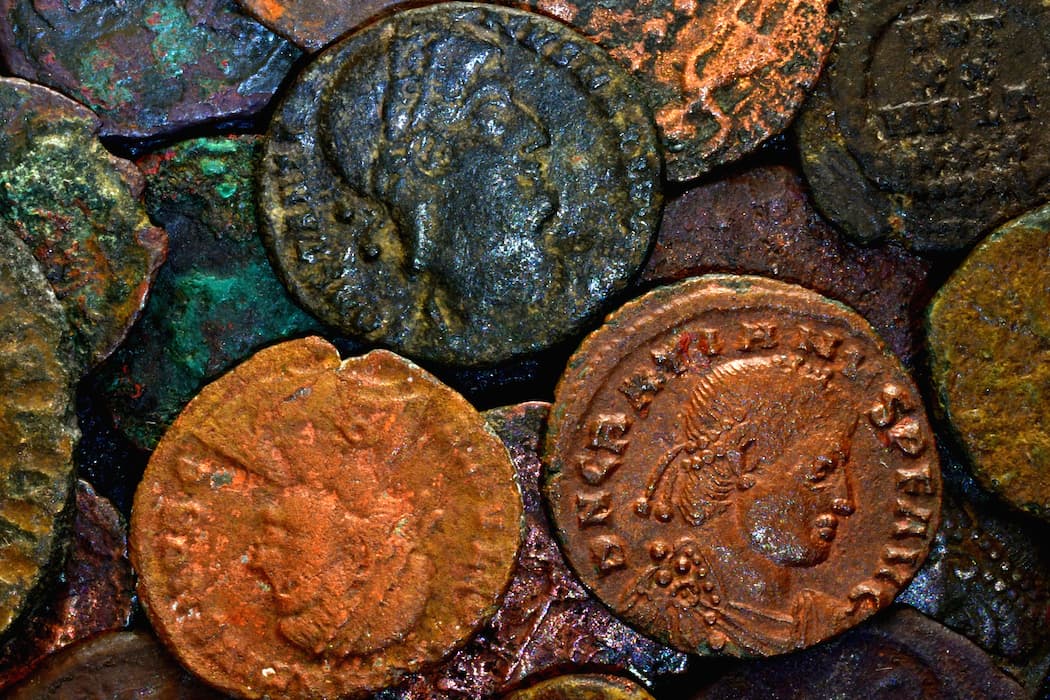
Then the Pharisees went out and laid plans to trap him in his words. They sent their disciples to him along with the Herodians. “Teacher,” they said, “we know that you are a man of integrity and that you teach the way of God in accordance with the truth. You aren’t swayed by others, because you pay no attention to who they are. Tell us then, what is your opinion? Is it right to pay the imperial tax to Caesar or not?” But Jesus, knowing their evil intent, said, “You hypocrites, why are you trying to trap me? Show me the coin used for paying the tax.” They brought him a denarius, and he asked them, “Whose image is this? And whose inscription?” “Caesar’s,” they replied. Then he said to them, “So give back to Caesar what is Caesar’s, and to God what is God’s.” When they heard this, they were amazed. So they left him and went away.
Have you ever had someone ask you a question not so much to understand you, but to try and entrap you? I have (and more often recently). We need to seek God’s wisdom in our replies. Prayer is helpful.
When we stand for the truth, act in love, and shine light into dark places, we will get attacked from time to time. We are not to seek out battles or attacks; but also we must not be surprised by them, just prepared. Some attacks will be full frontal attacks, trying to knock us out of commission. Others will be more subtle, like this attack on Jesus, posed in the form of a flattering question.
This attack from Jesus presented itself as an innocent question, yet there was a sinister motive behind it. Should we pay taxes to Caesar? If he said “No”, they would have probably reported him to the Romans. If he said “Yes”, they would have likely tried to cast him in the light of disloyalty to God and the Jews. So what does Jesus do? He seeks to understand the heart behind the question.
The heart was a heart of deception, slander, pride, and murder. And so he pivots his answer to address the heart as well.
Whose picture is on the coin, is an indication of who made the coin — Caesar. The coin, money, the system of commerce —- these are all Roman.
As far as his comment “give to Caesar what is Caesar's and to God what is God’s” I always have thought this was referring to money. After praying about this passage today, I see that it has a deeper meaning in context here.
Jesus is telling them to give the money minted by Caesar to Caesar, but to give the hearts, made by God, but corrupted by sin, back to God. Powerful!
What in my heart have I taken control of that I need to give back to God?
Lord, thank you for this penetrating challenge. You seek to have my heart primarily. My financial giving reflects my heart. It does not override or compensate for a sinful heart. “Create in me a pure heart, O God, and renew a steadfast spirit within me. Do not cast me from your presence or take your Holy Spirit from me. Restore to me the joy of your salvation and grant me a willing spirit, to sustain me.” (Psalms 51:10-12)